ARTICLE
What companies that have built new businesses have learned: 3 success stories from CVB.

Inés Lo Sardo
Growth & Business Development
Feb 10, 2026
Creating new companies within large corporations is not just about having good ideas. It is about knowing how to build: deciding what is developed internally and what is launched to the market as an independent venture. The process demands discipline to create something solid and a clear strategy to move from validation to scaling. In recent years, Corporate Venture Building (CVB) has ceased to be a trend and has become a key lever for growth. However, many organizations still find themselves halfway. The true challenge of CVB arises when a project transitions from being a pilot to becoming a real business, leveraged by the corporation's resources.
Next, we present three successful examples that illustrate this transition, each in a different sector, but with a common lesson: the success of CVB lies in knowing how to change phase at the right moment.
⸻
From XTRACT to OLEUS: when the MVP is no longer enough.

OLEUS was born as XTRACT, an MVP developed within The Accelerator powered by Nestlé, aimed at testing whether a solution to improve energy and performance could connect with athletes looking to excel. During the testing phase, hypotheses about the product and target were validated, but the challenge was clear: how do we transform this prototype into a global premium brand? Collaboration with Nestlé was essential, not only for the resources and institutional support but also for their ability to provide a structured approach to scaling.
The entry of a Venture Builder (Bundl) as a partner and co-investor was key. Together, they refined the value proposition and the brand narrative, designing a global launch strategy that connected with real athletes through market tests and digital campaigns. OLEUS is not just the result of a successful MVP but a deliberate business construction, with an active community and a scalable model, which transformed what began as a simple proof of concept into an international brand.
From Car2Go to Free2Move: when a venture ends up creating a category

In 2008, Daimler launched Car2Go as an experiment to explore urban mobility without ownership. It was not part of its core business, but a way to learn quickly about a sector still in development. The key to success was that it was allowed to operate with autonomy and different rules, which enabled the validation of the business model in an emerging market: from ownership to shared use.
Over time, the urban mobility market matured, and with it, Car2Go's approach. The merger with Stellantis' Free2Move marked the turning point. What initially seemed like an isolated service transformed into a global platform with millions of users. The leap from Car2Go to Free2Move demonstrates that it's not always about going it alone; sometimes integrating is the best strategy to scale and create a new category.
Wattson Charge: from energy pilot to business infrastructure

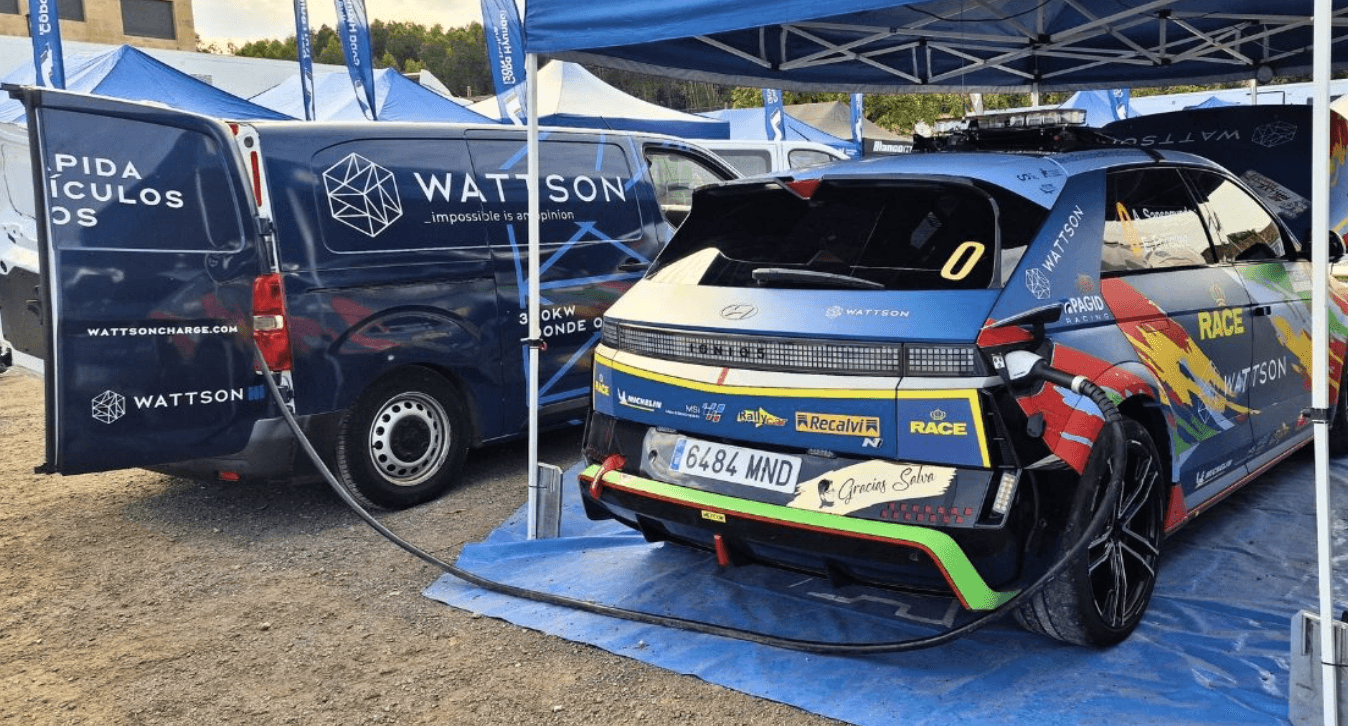
Wattson Charge was created to solve a very specific problem identified by Porsche's innovation team: how to deploy electric vehicle charging in an operational, replicable, and economically viable manner in real environments. Like many projects in the energy sector, its early phases were marked by pilots, technical tests, and controlled deployments. Everything worked, but the risk was clear: getting trapped in a succession of ad hoc cases without a logic of scale.
The turning point came when the focus shifted from just the technology to the system. Clearly defining the customer, standardizing the solution, building a solid operational model, and equipping the project with governance and metrics from early phases allowed Wattson Charge to behave like a venture and not just another energy project. In asset-intensive sectors, venture building is not about rushing, but about building with the intention to last.
Three cases, one common lesson
Although OLEUS, Free2Move, and Wattson Charge operate in very different sectors and scales, they share something essential: success did not come from the initial idea, but from knowing how to identify the moment when the project needed something else. More structure, more focus, more ambition, and most importantly: uncomfortable but necessary decisions.
Creating corporate ventures is not about launching many projects. It is about understanding which key opportunities help diversify and grow the business in the long term. At Byld, we support companies in their evolution from promising experiments to real businesses. And that is where the real work begins.